
Adventure Studies Menu
Fees, Clothing and Equipment
Fees
Due to the high level of course delivery, the high instructor-student ratios used, and the associated costs with operating a program of superior quality, tuition and activity fees for the program average $13,000 - $16,000 per year for domestic students. This may vary with individual student course selection and the number of activity courses chosen.
International applicants should read about fees on the International Students page. Costs are approximately $30,000 - $35,000 per year, depending on field course choices.
Included within the costs for the program are national and provincial association exams and certifications, backcountry hut and lodge accommodation, helicopter flights, equipment use, high instructional ratios, TRU tuition costs, course transportation, campsite fees, etc.
Student loans are available for this program. Students must apply to the student loan organization in their province of residence.
Additional costs
Students will incur additional costs for acquiring food and and accommodation while in Kamloops and on course trips, purchasing or renting personal equipment, and purchasing textbooks and maps. There may also be additional costs on the self-directed expeditions.
- Personal expenses
- Trip food
- Avalanche kit
- Student equipment
- Self-incurred expedition costs
- Student association fees
- Building levy
- Student activity fee
Clothing and Equipment
The Adventure Studies Department maintains a fully equipped gear bay with a comprehensive inventory of technical and outdoor equipment, including rock climbing, sea kayaking, whitewater kayaking, surfing, rafting, skiing, avalanche safety, mountaineering, rescue and camping gear.
Adventure Studies students have access to this equipment through a mandatory $300 equipment deposit. The deposit is fully refundable upon program completion, provided all equipment is returned in good condition.
Students are responsible for providing their own personal clothing and select items of personal equipment. A detailed list of required items is provided below.
Students are not expected to purchase all required equipment before arriving at Thompson Rivers University. For example, gear for fall field courses such as Rock Climbing 1 and Mountain 1 should be purchased for the start of the fall semester, while gear for winter field courses such as Ski Tour 1 and Sea Kayak 1 can be purchased later, prior to the winter semester.
Required equipment for each program area is provided upon acceptance into the Adventure Guide Program.
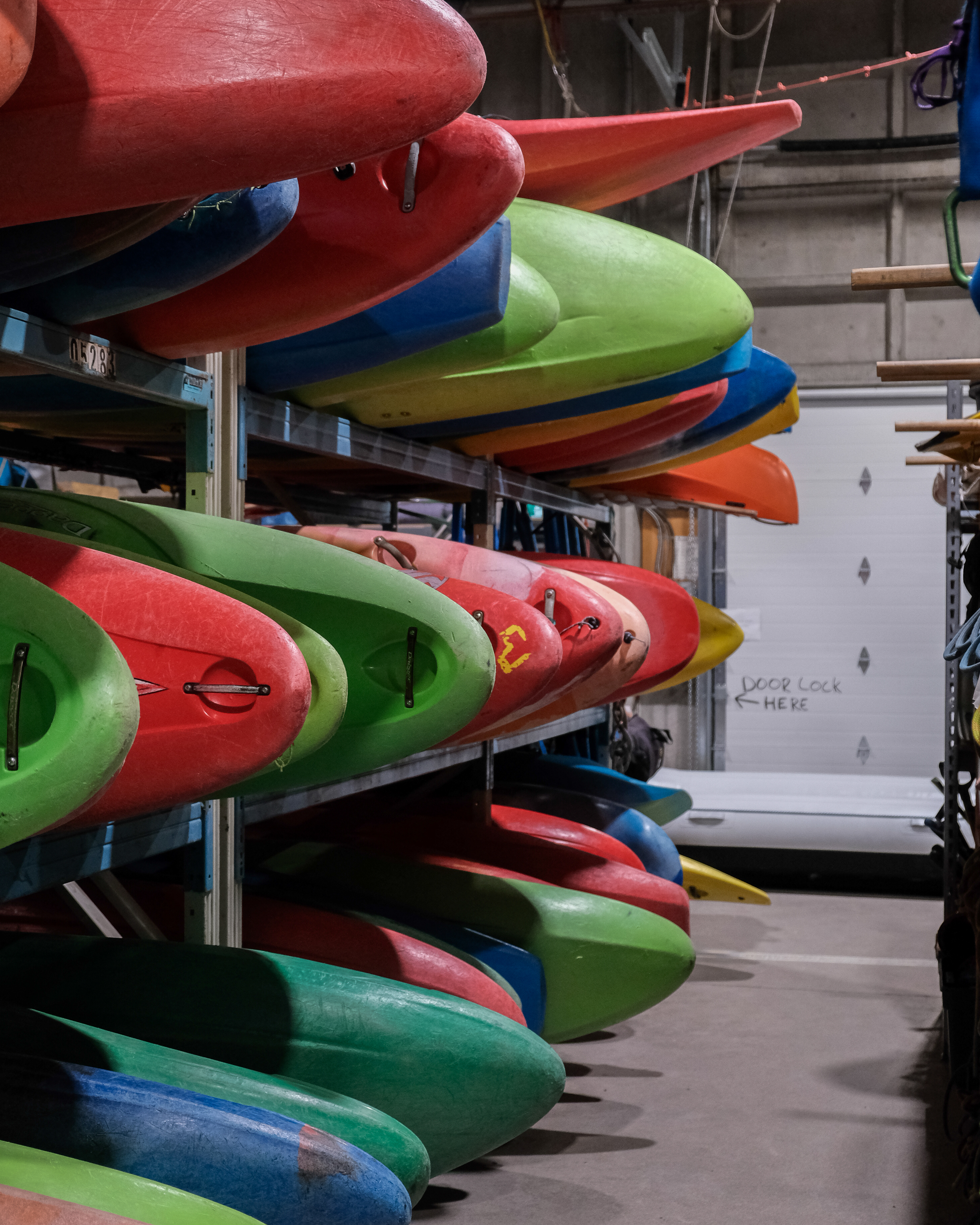
Program equipment and student access
Students have access to a wide range of department equipment for field-based learning. Personal clothing and selected items are still required, but many technical and specialty items are supported through the gear bay.
* Optional gear
Clothing
Outer Layers
- Rain jacket with hood (breathable material such as Gore-Tex preferable)
- Rain pants (breathable material, side zipper recommended)
- Wind shirt *
Insulating and Base Layers
- Synthetic t-shirts
- Base layers (mid-weight & expedition weight)
- Insulated pants (fleece or synthetic) *
- Fleece and/or softshell jacket
- Down or synthetic jacket or parka
- Additional layers (fleece, wool, sweaters, vest, etc.)
Head, Hands and Feet
- Wool/fleece hats and neck gaiter or balaclava
- Sun hat with wide brim
- Sunglasses with retainer, hard case & spare pair
- Thin wool or synthetic liner gloves
- Insulating wool/fleece mitts or gloves
- Waterproof gloves or over mitts
- Gaiters (Gore-Tex preferable)
- Wool or synthetic socks (minimum 3 pairs)
- Running shoes (one good pair)
- Approach shoes or camp footwear
- Medium to heavy hiking boots (above ankle, waterproofed)
Equipment
General Camping Equipment
- Backpack (~70L internal frame)
- Sleeping bag(s) (3-season and winter, ~ -18°C rating)
- Sleeping pad (closed cell or inflatable)
- Compass (Silva Ranger or equivalent)
- Trail eating utensils, bowl and cup
- Water bottle (1L wide mouth)
- Pocket knife (e.g., Leatherman)
- Personal first aid kit
- Headlamp and spare batteries
- 2 Rite in the Rain 311 logbooks
- Portable camp chair *
- Collapsible hiking poles *
- Stuff sacks / packing systems
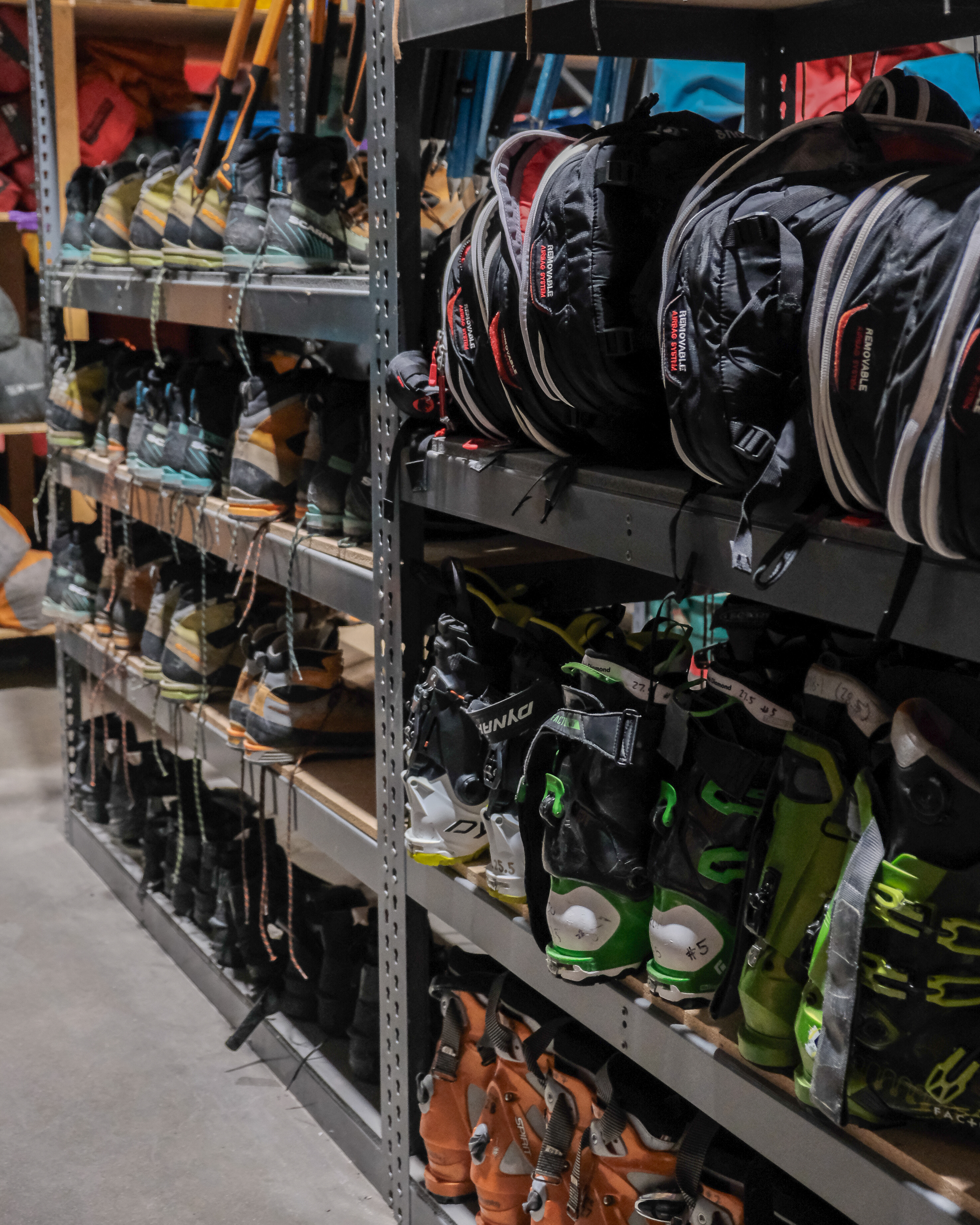
Build your course-ready kit over time
Students do not need to buy everything before arriving. Required clothing and personal equipment can be purchased in stages depending on the field courses scheduled in each semester.
Equipment Available in the Gear Bay
If you already own any of the items listed below, or can source equipment independently, this will help reduce demand on the equipment bay.
- 3-season tent
- 4-season tent
- Lightweight tarp with accessory cord
- Backcountry camping stove (e.g., DragonFly, Whisperlite)
- Car camping stove
- Lightweight pot set
During field programs, students are responsible for preparing their own meals and/or sleeping in their own tents.
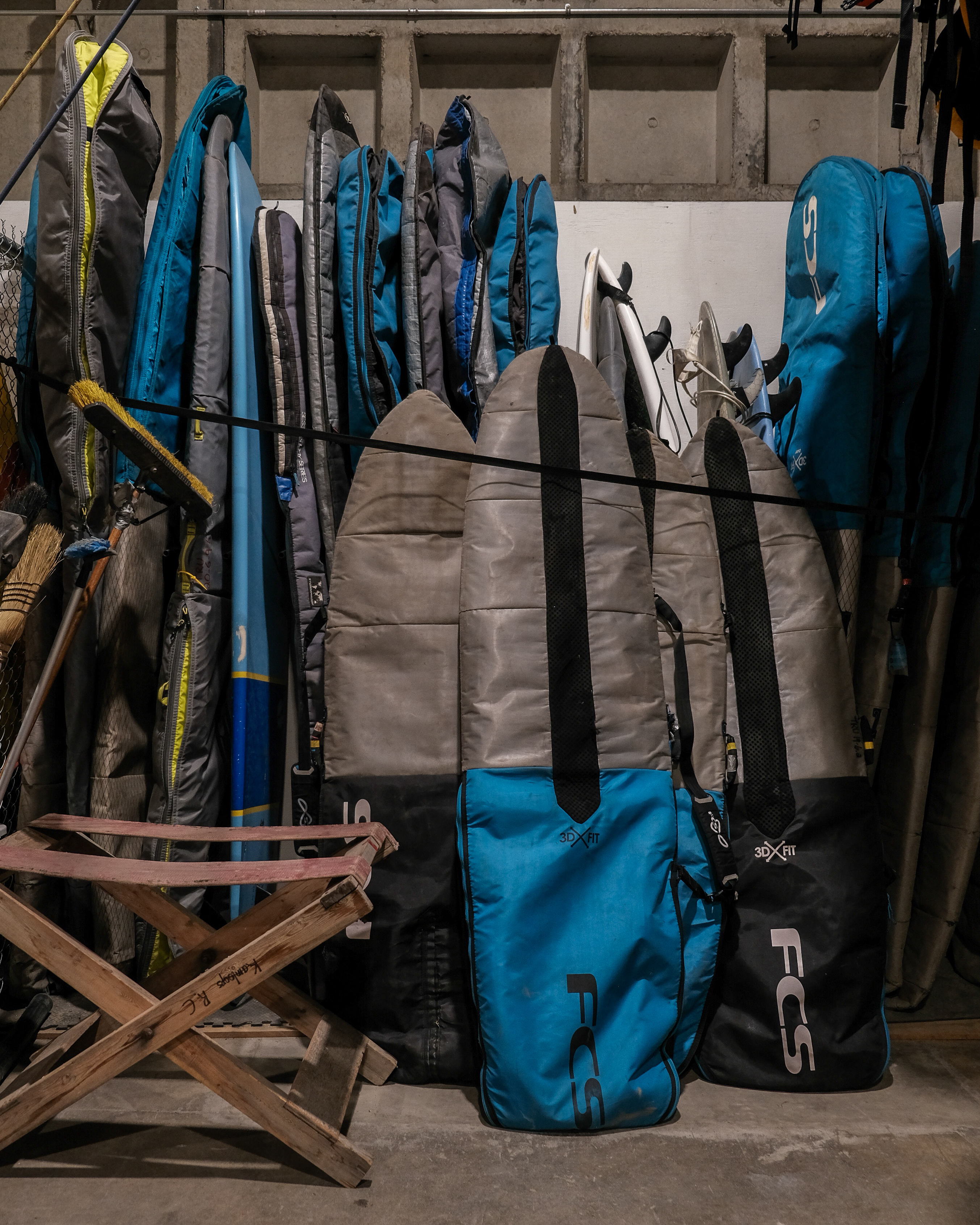
Prepare for mandatory course requirements
Some mandatory field courses require specific personal items in addition to department-supported equipment. These items help students arrive prepared and ready to participate safely.
Required Equipment for Mandatory Field Courses
ADVG 1530 Kayak 1
- 10 litre drybag
- Nose plug *
- Hard sole water shoes (no slip-on shoes)
ADVG 1570 Rock Climbing 1
- 2 locking carabiners and 1 non-locking carabiner
- Guide-style belay device (e.g., ATC)
- Rock climbing shoes
- Small day backpack (35–45L)
- Helmets and harnesses are available in the equipment bay